Welcome to my new-and-improved website, now including a blog! This is my first foray into blogging, so I’m not sure how it will go. But hopefully, here you will find my ramblings on new instrument acquisitions, musical/woodwind equipment, gigs, etc. It will mostly be focused on woodwinds, but there will probably be posts applicable to musicians of all types.
Last October I was asked to play a piece with the Bel Canto Company, a local professional chorus. They were doing La Muerte Sonriente by Diana Syrse which had a part(s) for Aztec Death Whistle and ocarina. Video from the concert is below.
This is the second post I've made about Dushkin recorders.  There's not a lot of information about them on the web.  The first post has info I pieced together from what little I could find.  If you're interested, just look back a few posts.

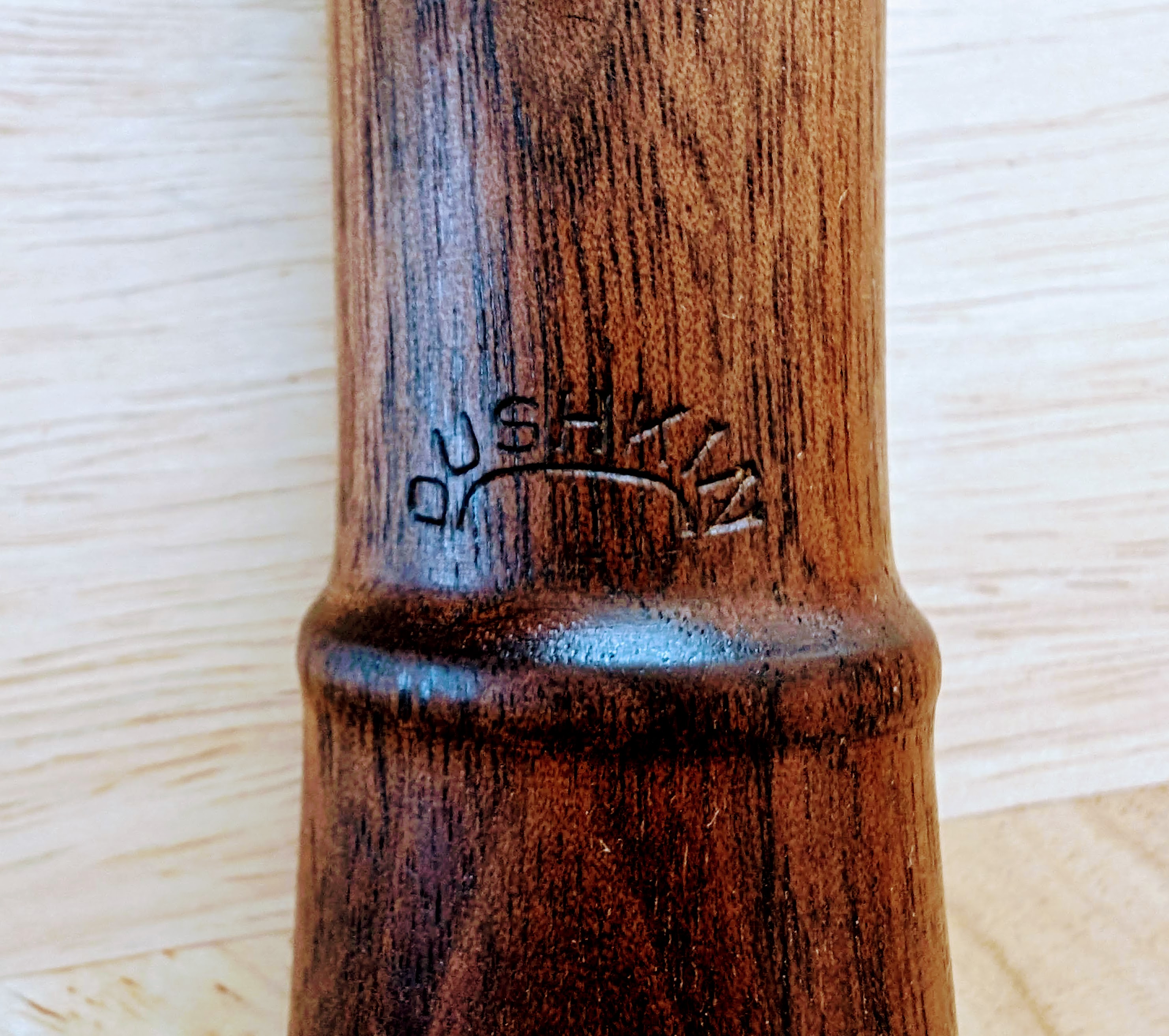
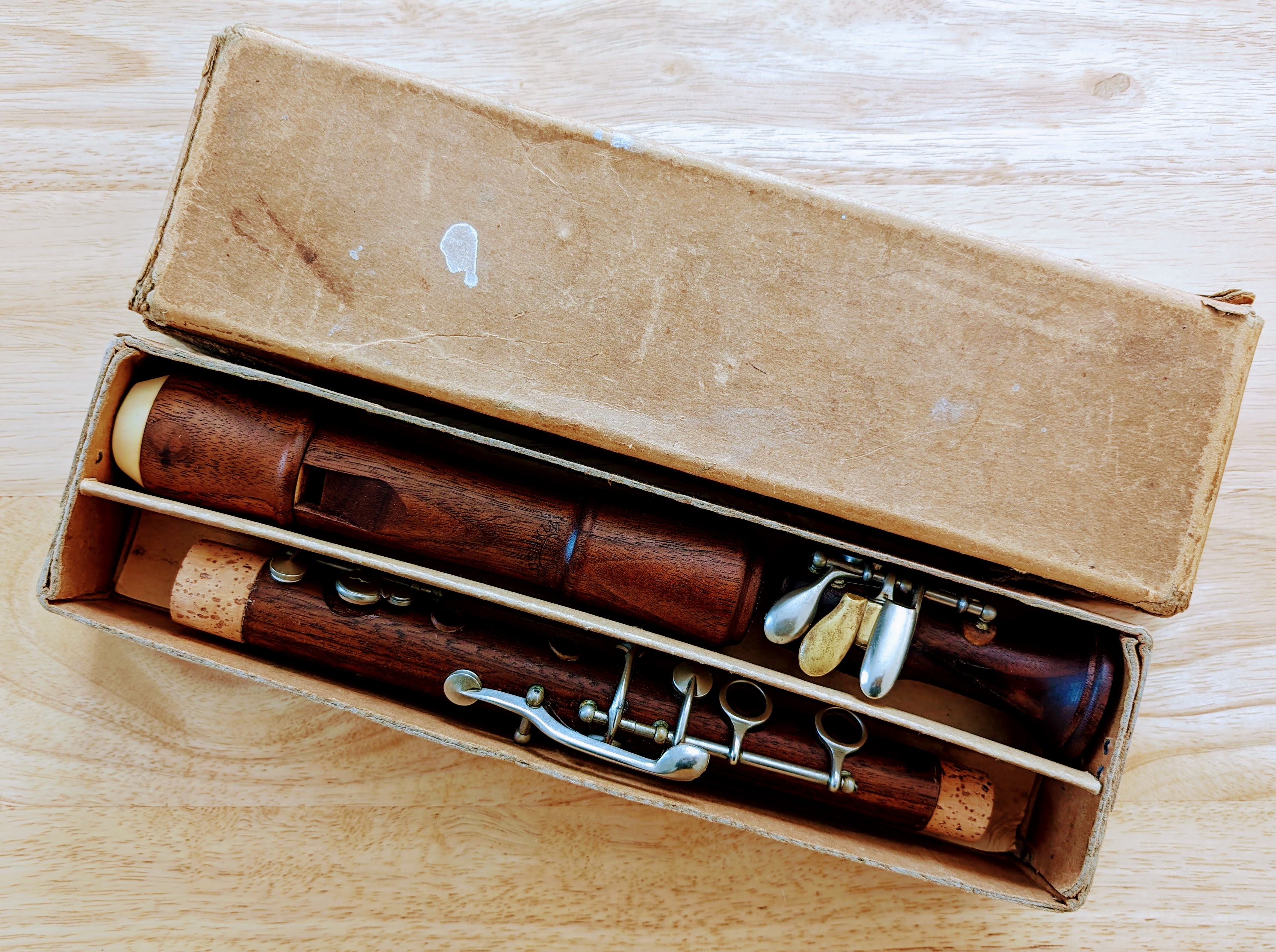
Last summer I was contacted by a woman named Sally who sent me pics of her Dushkin alto recorder, and wanted to know if I could help her learn how to play it.  The pics were small, but it was apparent it was a very unusual recorder.  It had keys, rings and raised toneholes.  Now, there are keyed recorders out there.  I've got a keyed soprano and tenor.  But usually, the keyed recorders are set up like a 6-key piccolo or 8-key flute.  I asked Sally to send some larger, more detailed photos.  She didn't have a musical background.  She had picked up the recorder many years ago somewhere in Ohio because she liked the look of it, and had just rediscovered it in a cabinet and decided to learn how to play it.  I wanted to help her out, but after looking at the pics, I wasn't sure how to do that.  I sent a 6-key piccolo fingering chart her way, but said it was not going to be an exact match and might be a little difficult to figure out.
A few weeks went by, and Sally wrote again that it wasn't working out and wanted to know if I wanted to buy it.  So I sent an offer, and she accepted.  Once it arrived, and I could lay my hands on it, it was even odder than it looked in the photos.  And it needed work, which didn't really help Sally's endeavors.  The pads were shot, the G# key was cracked, there as a broken spring, etc.  So I took it to my repair tech for an overhaul and just got it back.   I'm still trying to figure out the fingerings.  It's kind of a cross between clarinet, oboe, 6-key piccolo and recorder.  The first two octaves play pretty well.  I think the third octave will probably play well too, after I figure out the fingerings (that uppermost key must do something).

I'm thinking this may be some kind of prototype?  I've scoured the net, but I can't find another one like it.  If anyone has an information, or has seen another one, let me know.  And thank you, Sally, for sending it my way.  I'm going to figure this thing out.  🙂
October is ocarina awareness month....aka Ocatober. Four US-based ocarina ensembles each take a week in October to post daily ocarina videos. This was my contribution. The "Sweet Birdie" Mazurka for Ocarina and Piano by Charles Le Thière. I used an approximately 100 year old ocarina by Charles Ullmann. I'm assisted on piano by Stephanie Lindley.
Rivals of the Tonette in the "pre-band" instrument world were Song Flutes by Fitchhorn (later Conn) and Flutophones. I'll also include an ocarina by Waterbury in this section.
The Song Flute is very similar to the Tonette. There always seems to be some debate if the Song Flute is an ocarina or not. I say it is an ocarina. Unlike the Tonette, the Song Flute has a small opening in the "bell". But if you were to close that hole while playing, you still get a tone. So in essence, that hole acts like a tuning hole found on some clay ocarinas. If it were an open pipe, like a Flutophone, when you close off the end, you would get no sound.
Song Flutes were first produced (and developed) by Fitchhorn. At a later point in time, Conn bought out Fitchhorn. So you will find both examples with both names on them. Like Tonettes, the Song Flute came primarily in black. They were also made in much smaller numbers in white and red. Song Flutes from Conn can still be purchased, but the quality isn't very good.
Fitchhorn Song Flute with Original Box
Fitchhorn (top) and Conn (bottom)
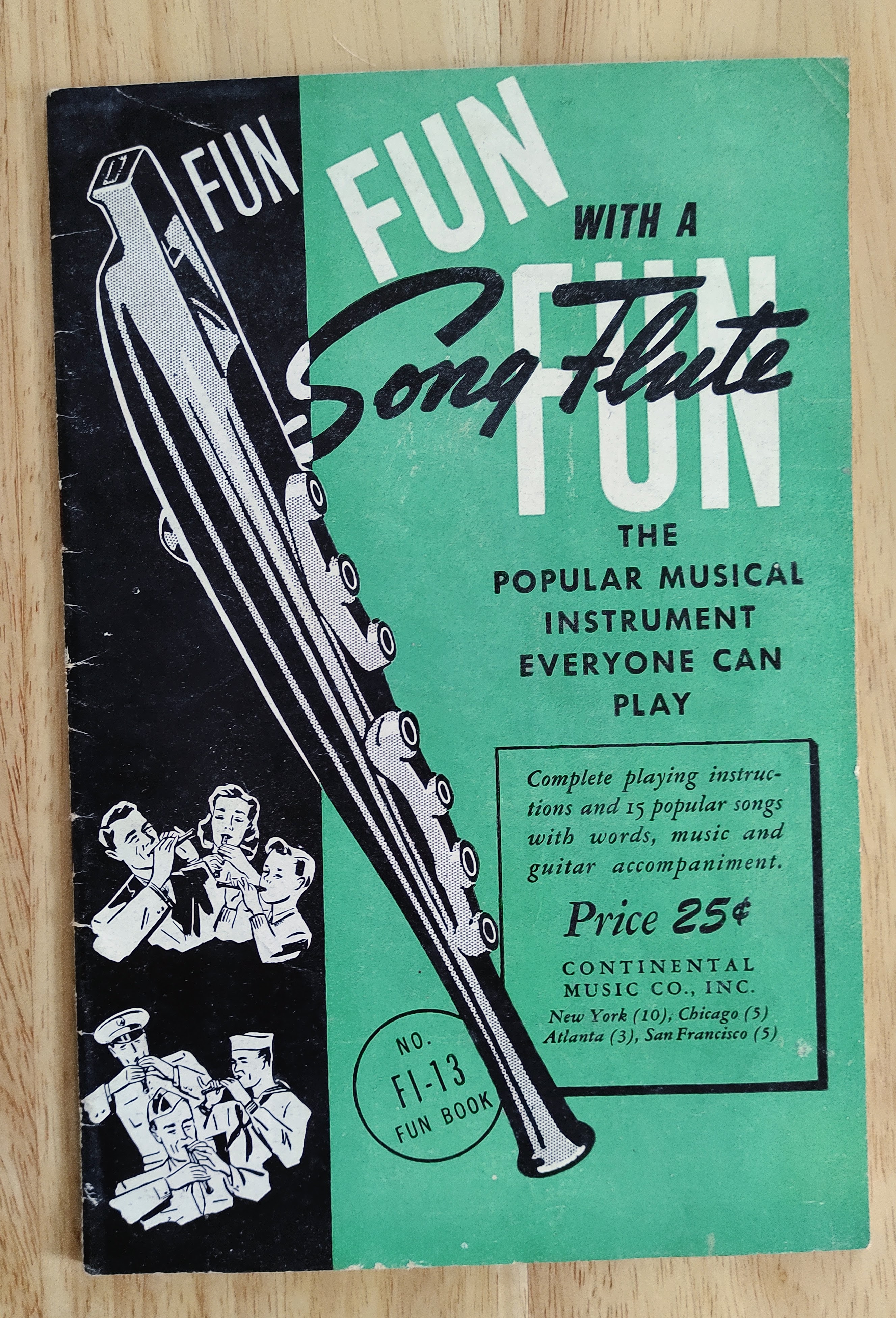
Fun with a Song Flute, copyright 1944
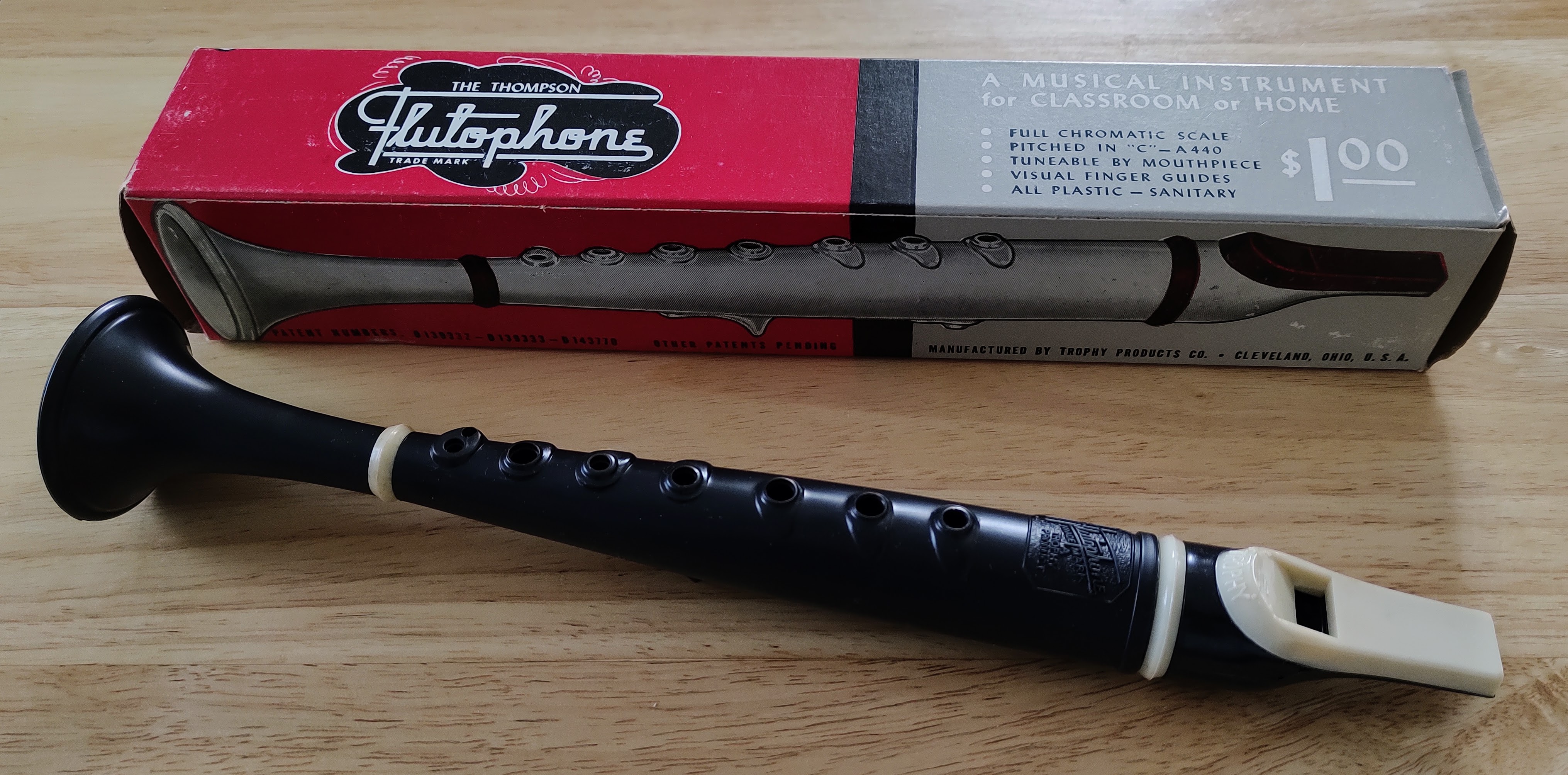
Another popular pre-band instrument used in school systems was the Flutephone by Trophy. Again, similar looking to the Tonette (and Song Flute) but with an open end like a recorder. I would categorize this as an actual flute. When the end is closed, there is no sound. Unlike the Tonette and Song Flute, black was the scarcer color. The primary color scheme for the Flutophone was white with red accents. Flutophones are still being produced, but again, the quality is not very good.
Flutophone with Original Box
Flutophones in the Two Color Schemes
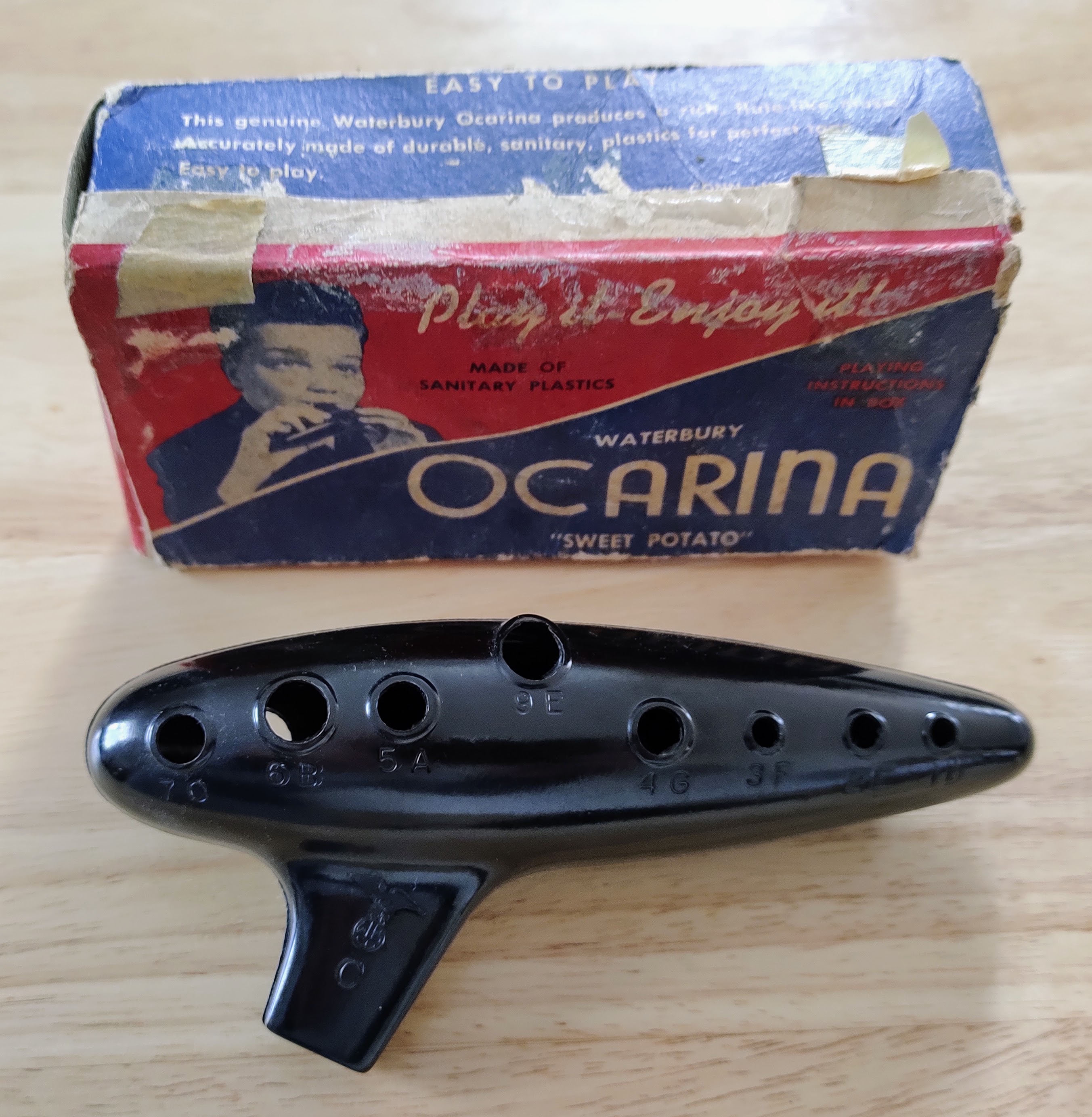
I'm including a ocarina by Waterbury because it's the same vintage and would have been marketed to the same person. It's a heavy plastic ocarina of varying quality. They came in two styles, and you could choose the key of C or the ever popular key of E.
Ocarina by Waterbury with Original Box
More tonette, song flute, flutophone posts to come......
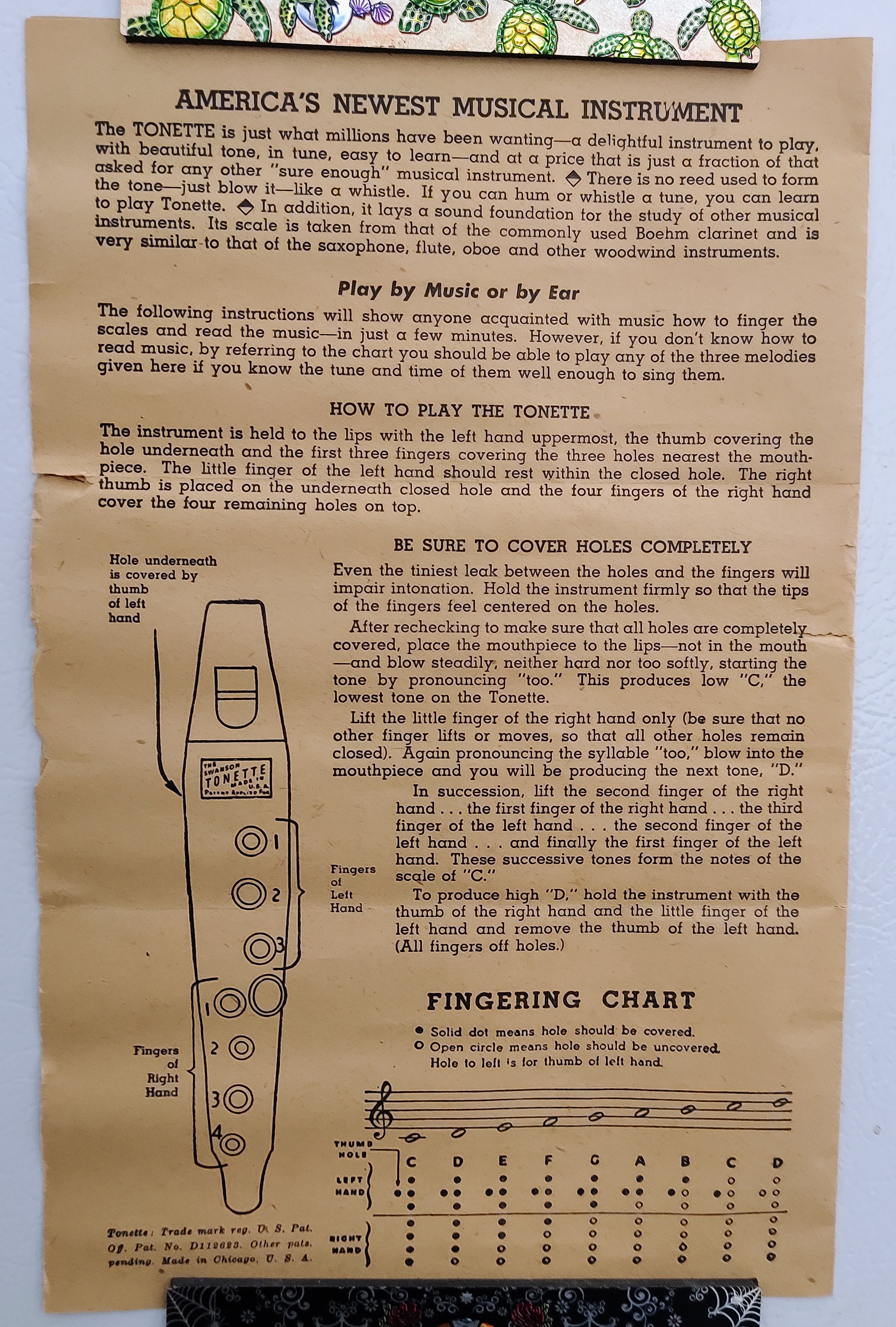
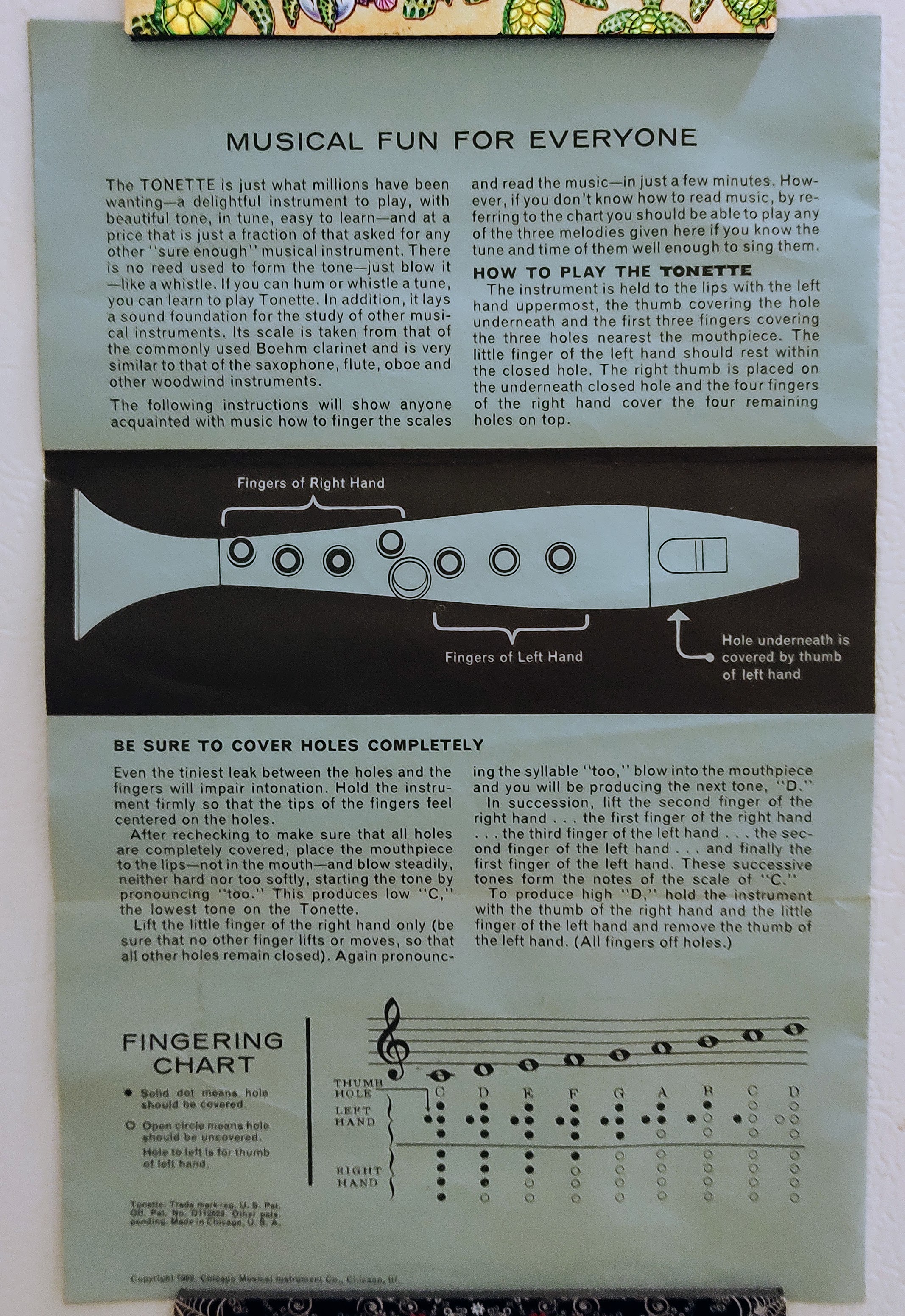
The tonette is what my elementary school used as an introduction to instrumental music. For me, it was 3rd Grade, 1977-ish. Nowadays, schools tend to use recorders or even ukuleles. Back in the day, some schools used flutophones or song flutes instead of tonettes. I'll talk a little bit about each of those in other posts.
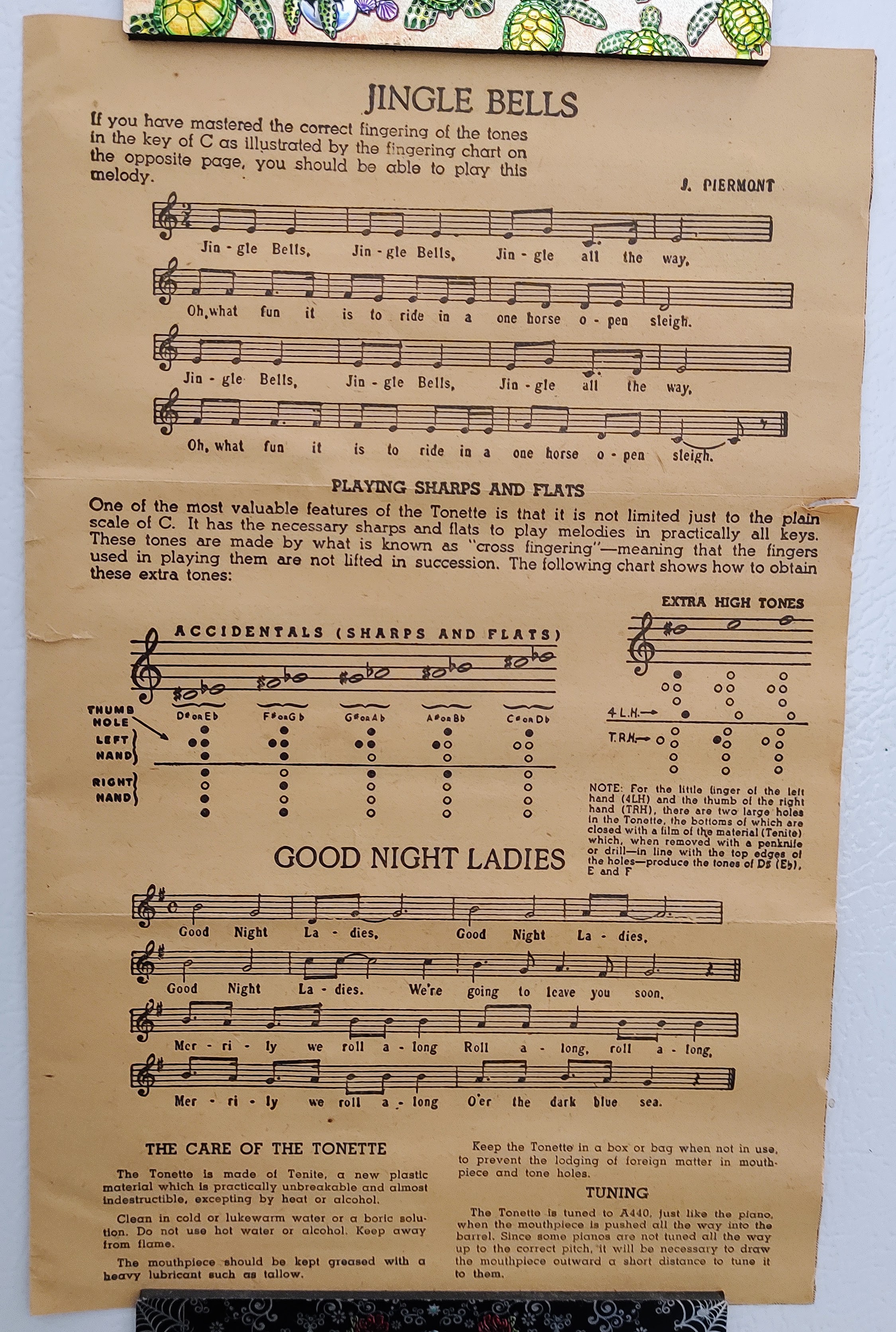
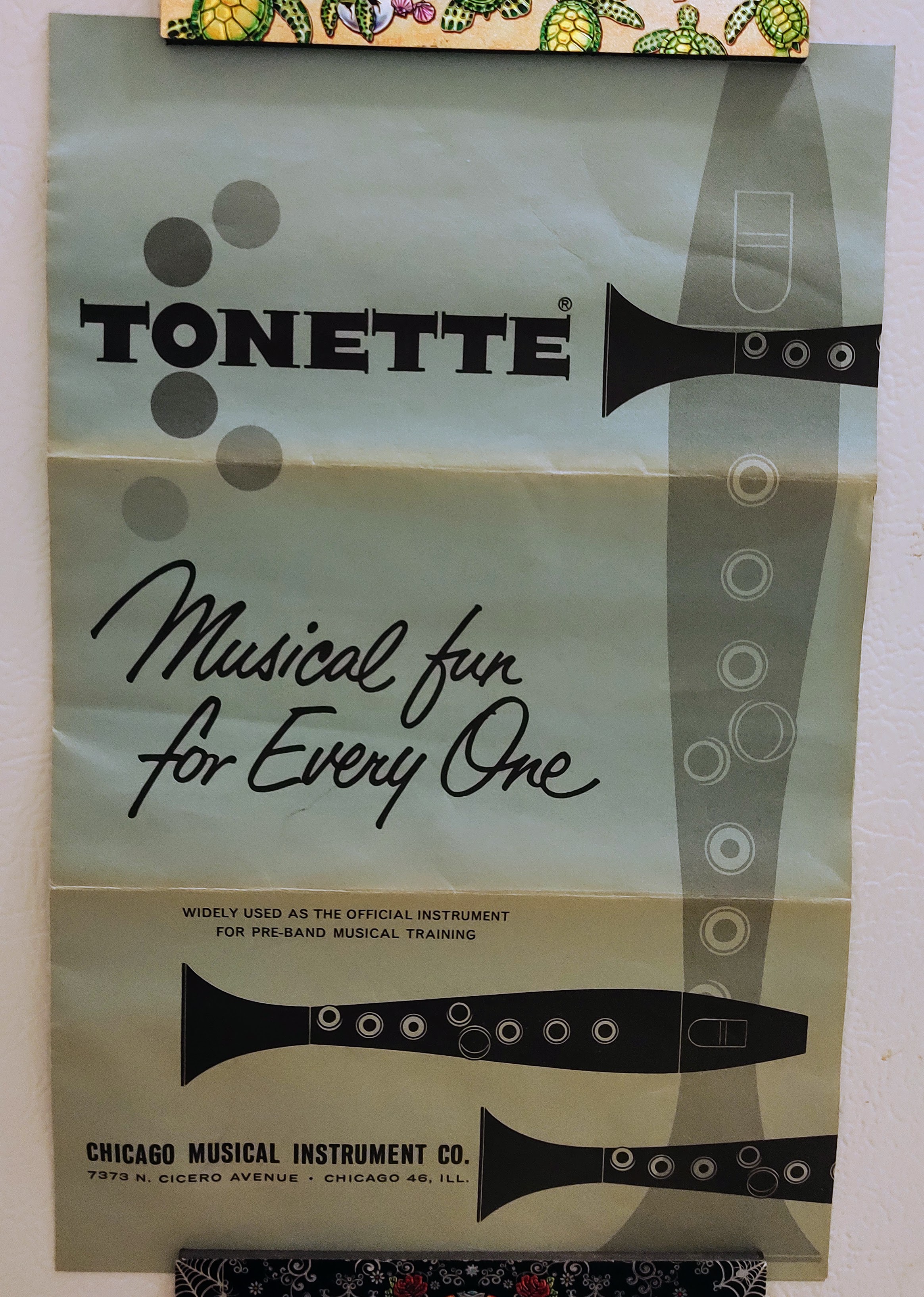
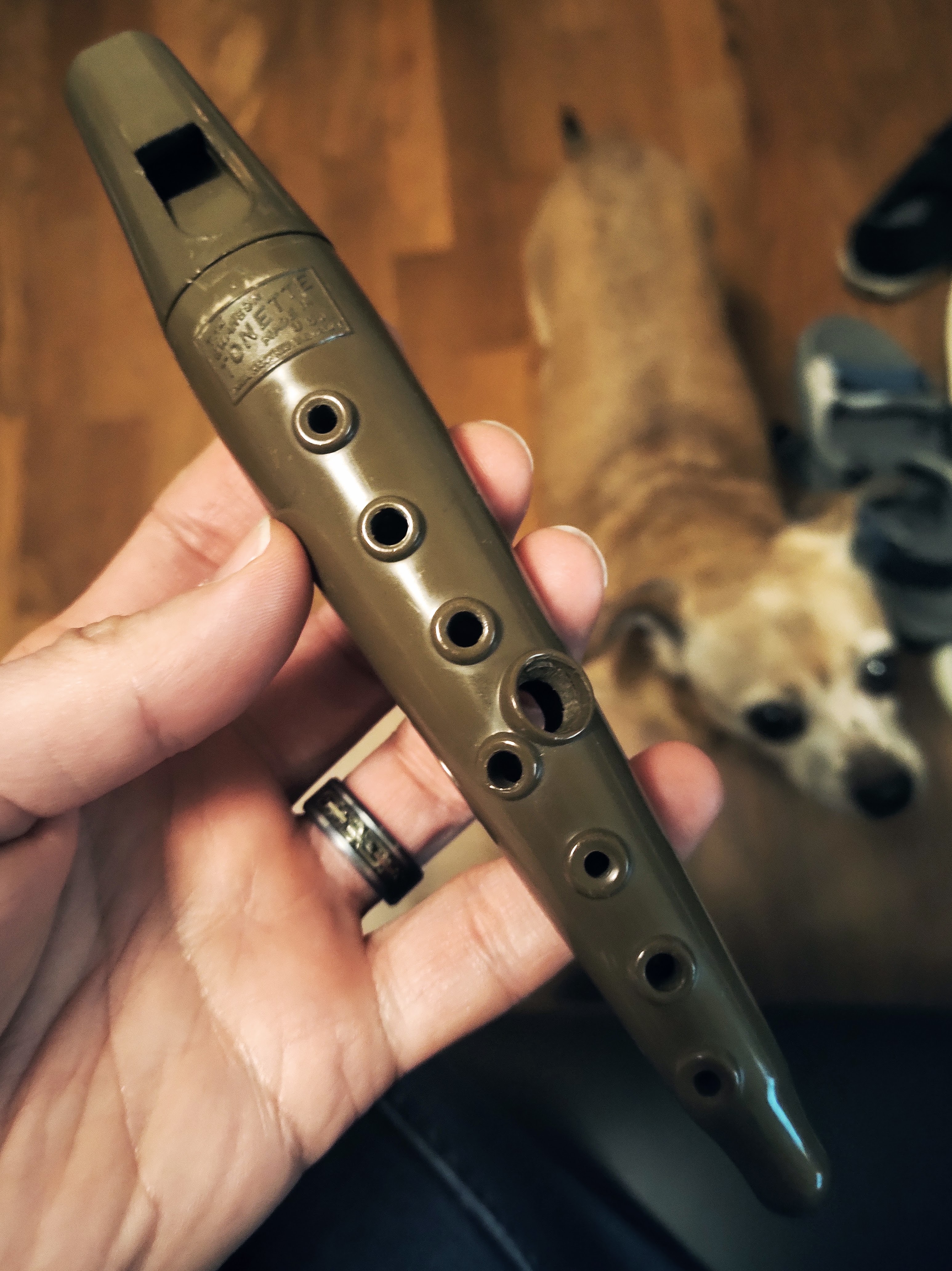
The tonette is basically a plastic, inline (vertical) ocarina. Initially, they have 7 holes on top and a thumb hole on the back. There are two additional indentations for a finger and the right thumb that can be removed with a sharp knife to extend the range if so desired. They came out in 1938 and became a popular starting instrument in the school systems. Most of them were black, but they also came in various colors through the years. There were bright colors like red, green and yellow. There were some swirled "marble-y" colors. And there were olive green ones made for the military during WWII and later used for the Boy Scouts. Tonettes are no longer made. There was a reissue by Gibson a few years ago, but they weren't of the same quality.
Tonettes of Various Colors
Yellow Tonette with Original Box
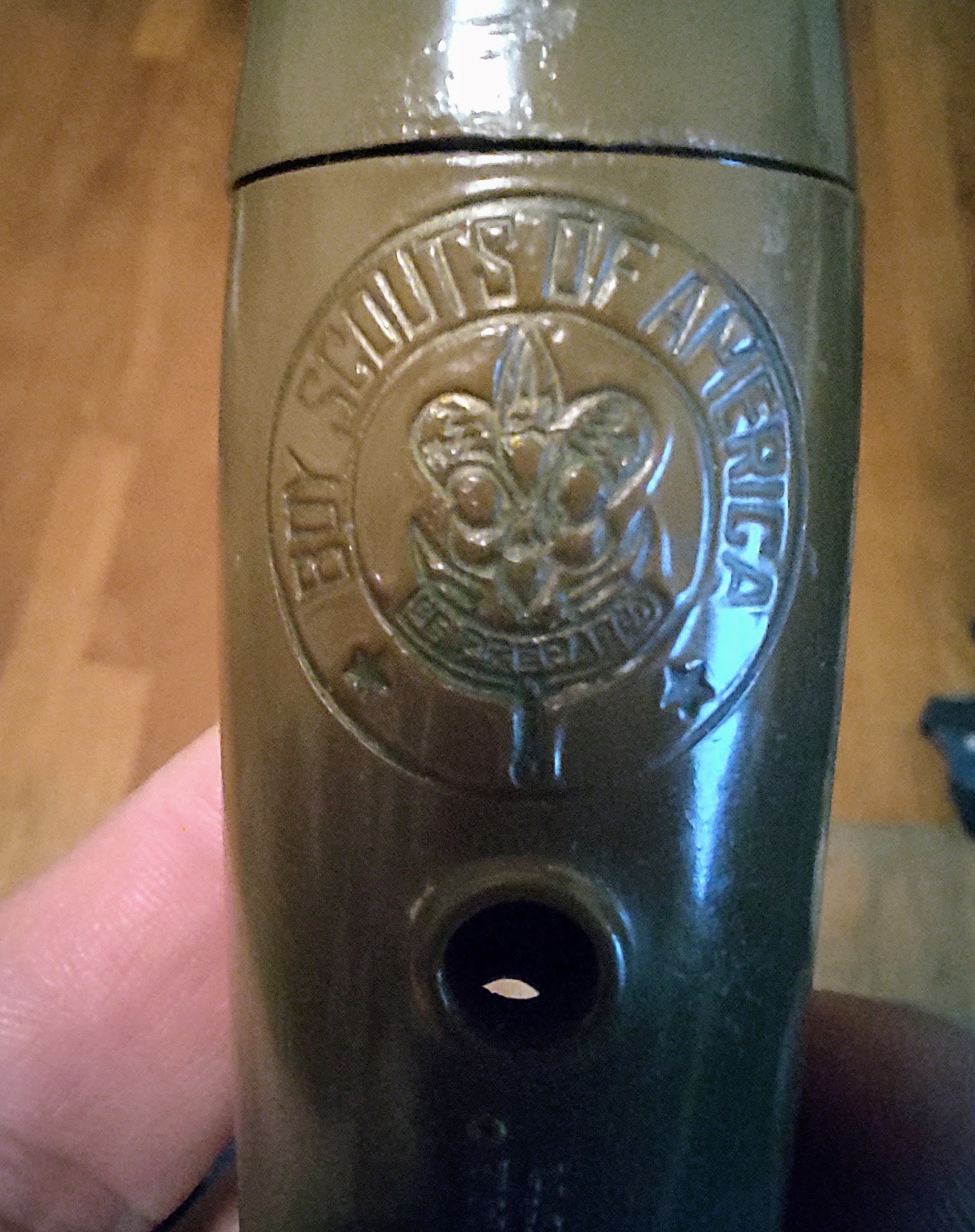
The tonettes made for the military and the Boy Scouts were an olive green color. The Boy Scout instruments have "Boy Scouts of America" embossed on the back.
Boy Scout Tonette
Boy Scout Tonette
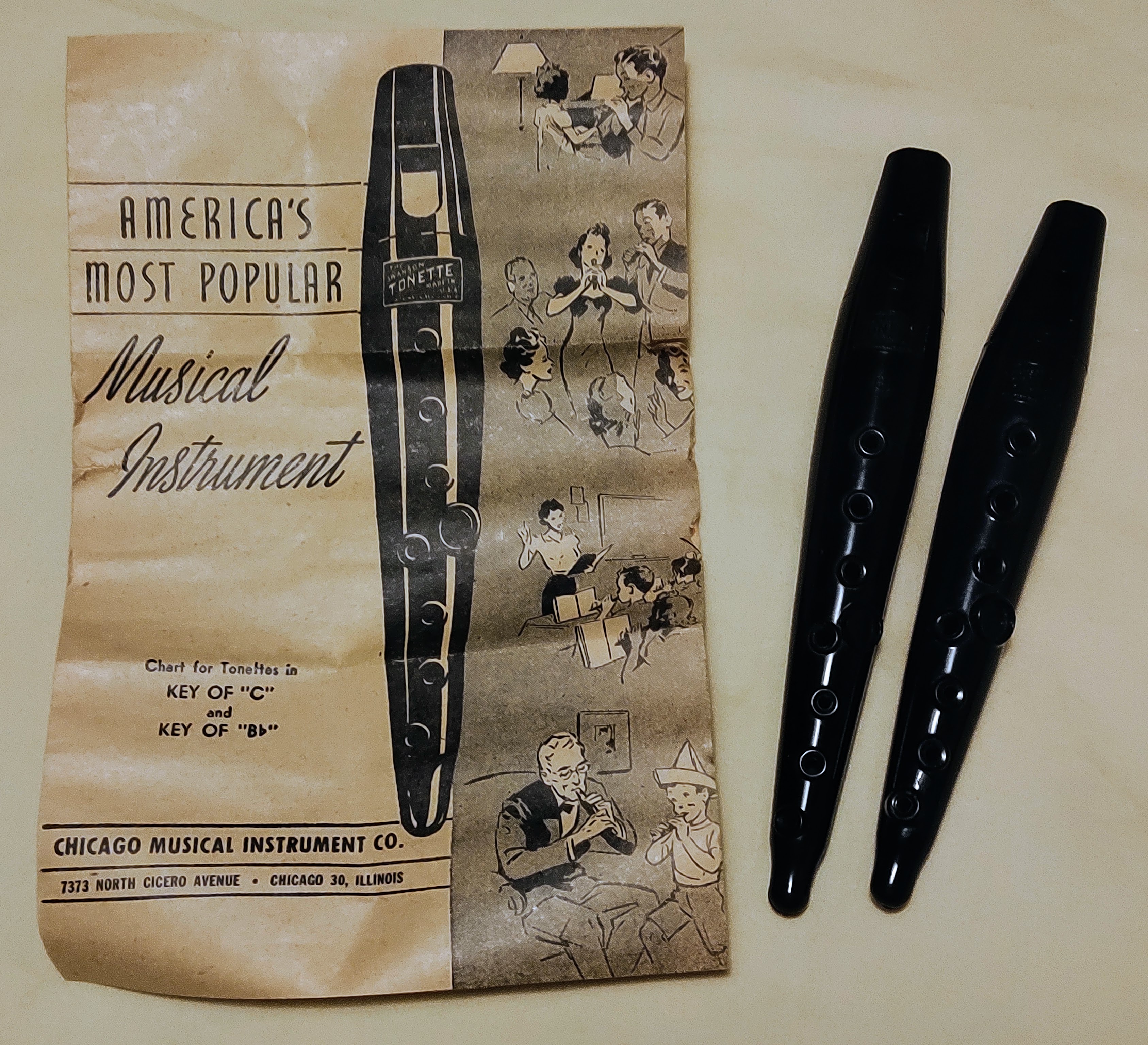
Tonettes are typically in the key of C. However, there were also some made in the key of B-flat. These seem to be exceedingly rare. I recently picked one up. They are a little longer than a typical tonette, and have "Bb" stamped on them. I'm just guessing, but I'd say 99.5% of tonettes are in C.
Tonettes in Bb (left) and C (right)
B-flat Tonette
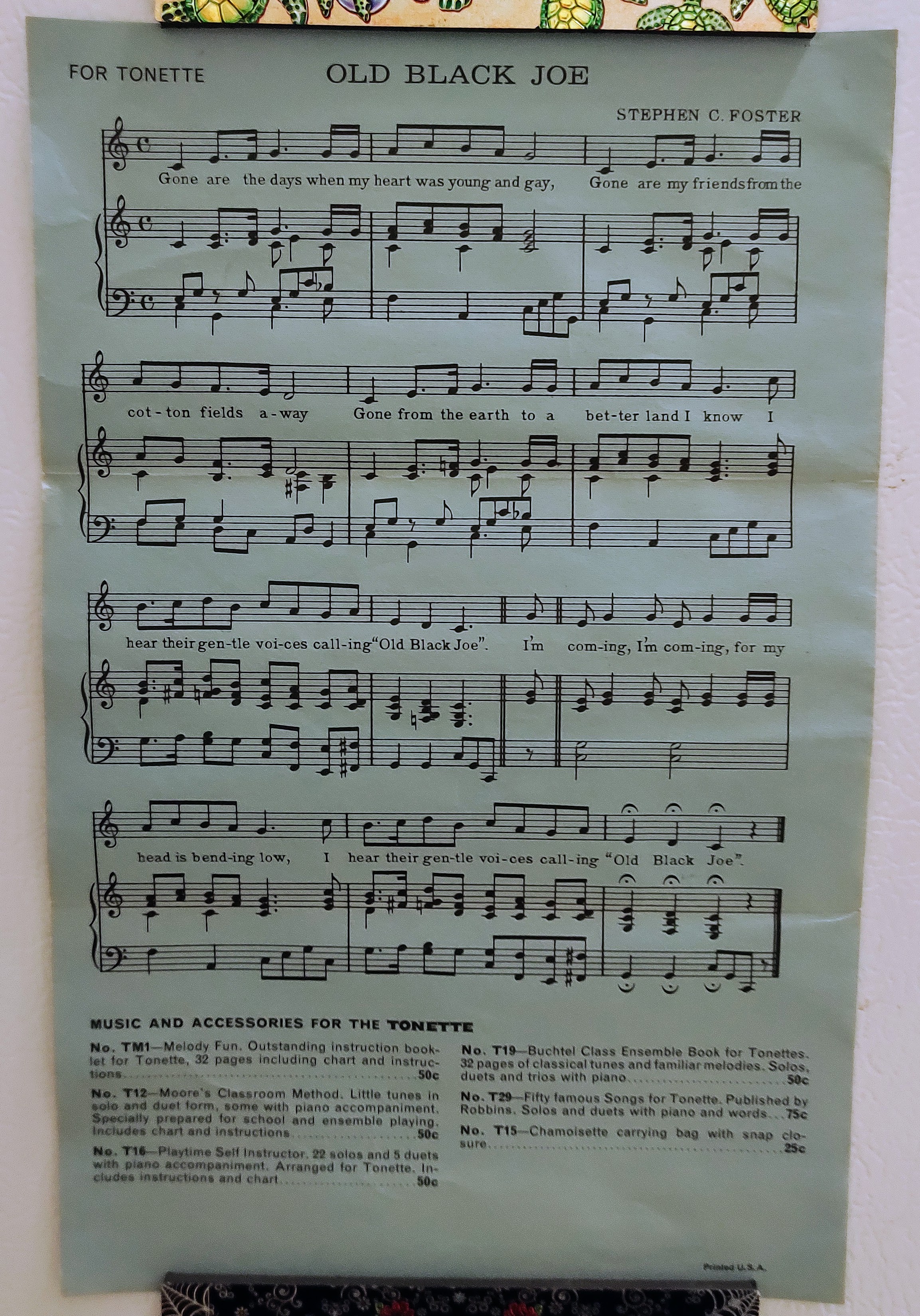
There was even a newsletter you could subscribe to called "Tonette News and Tune of the Month". I'm not sure of the dates of these. I've got the first 5 editions, but they aren't dated. There is a copyright of 1939, but that may just refer to the tunes on the inside. The have short articles about musicianship, how to care for your instrument, information about other instruments and a song. The tunes in the ones I have are written for 2 tonettes (second tonette is optional) and piano.
Tonette News and Tune of the Month
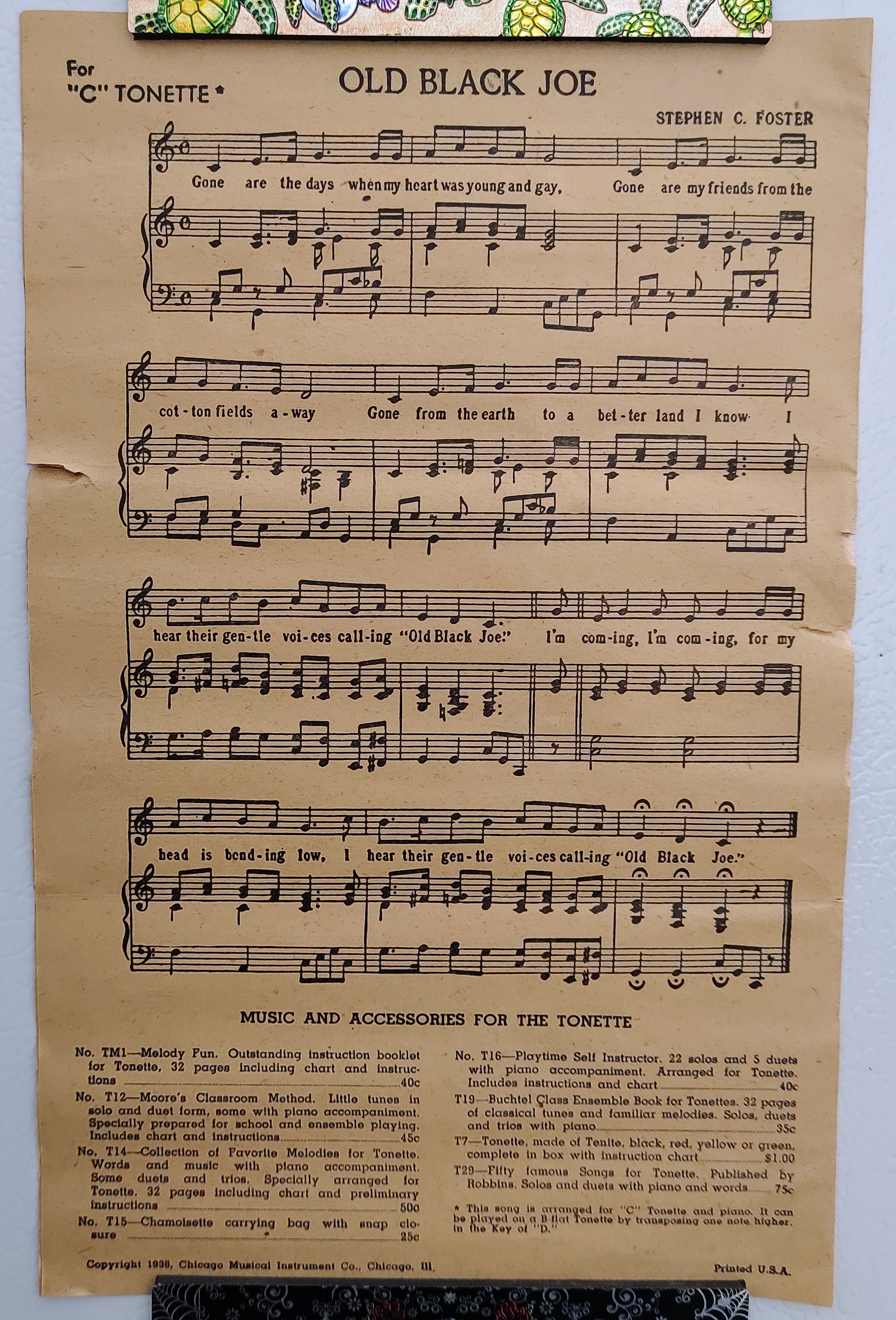
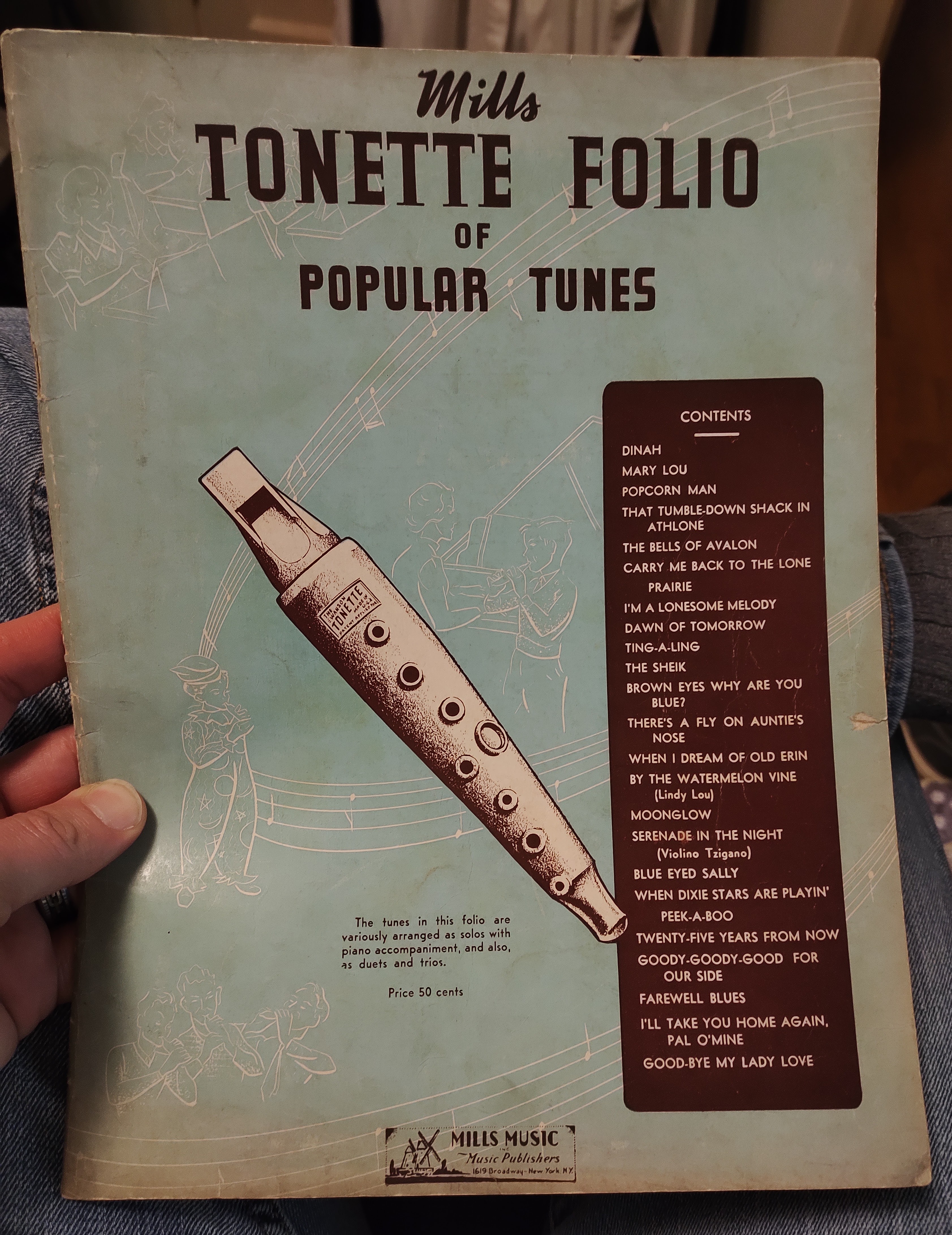
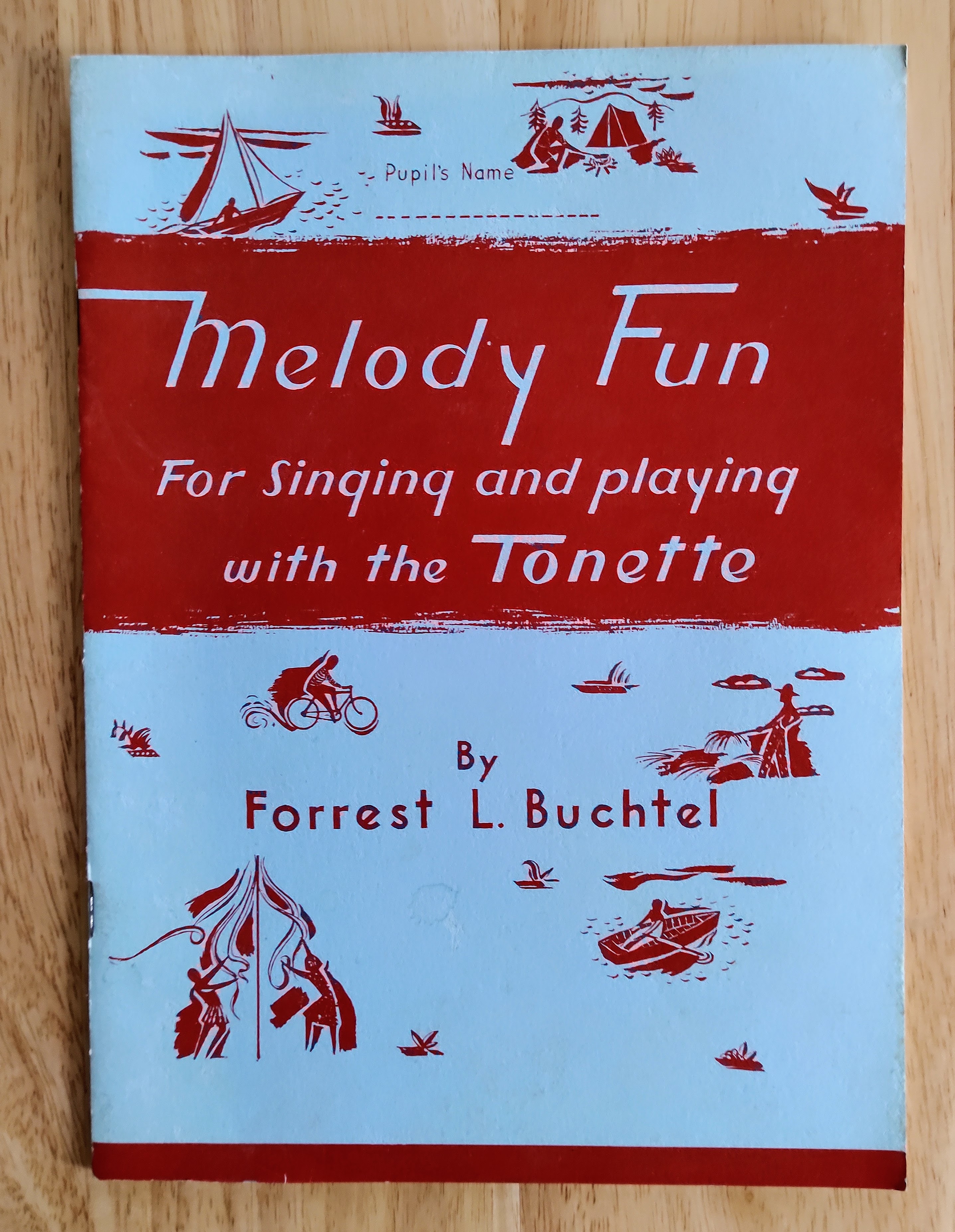
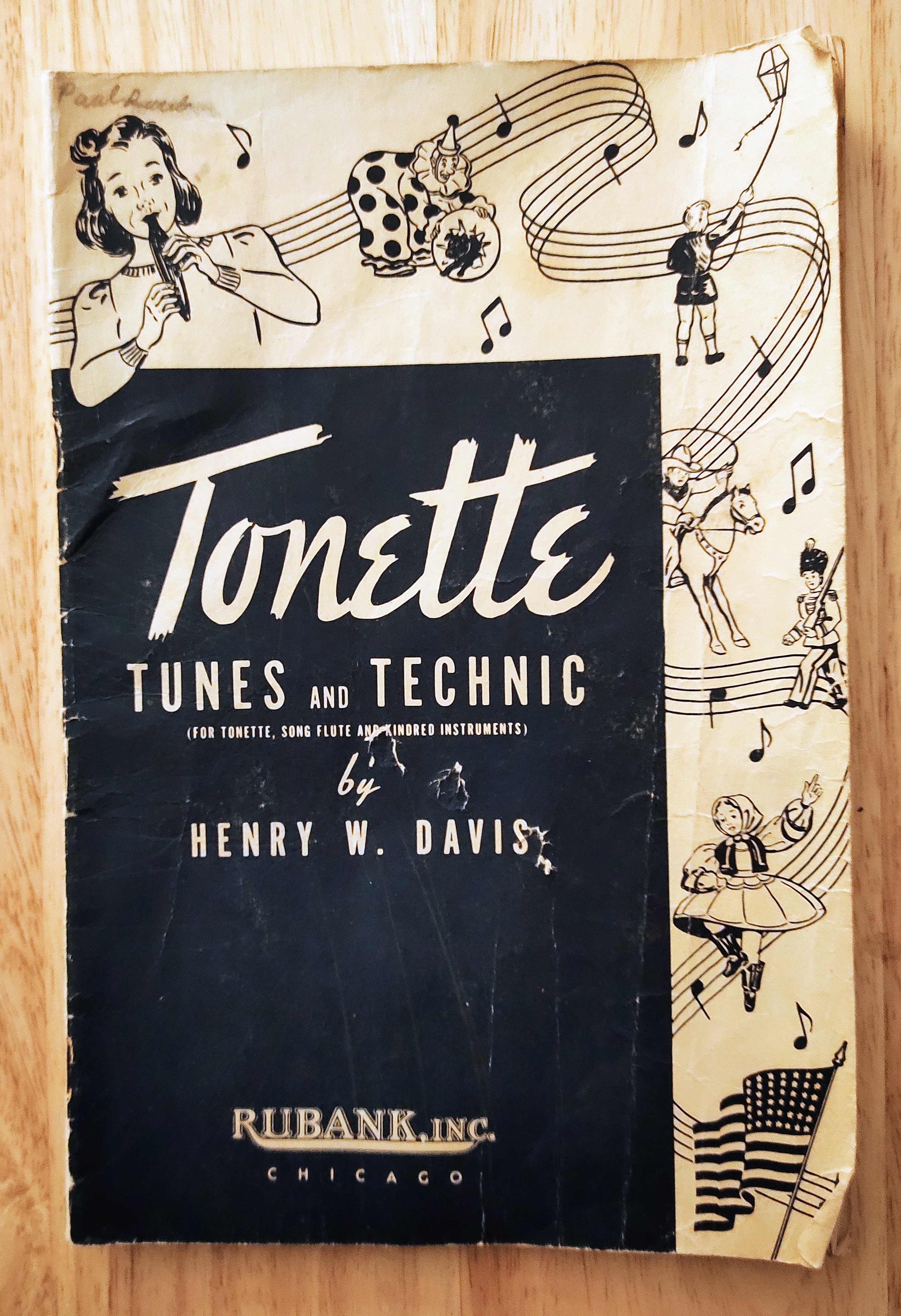
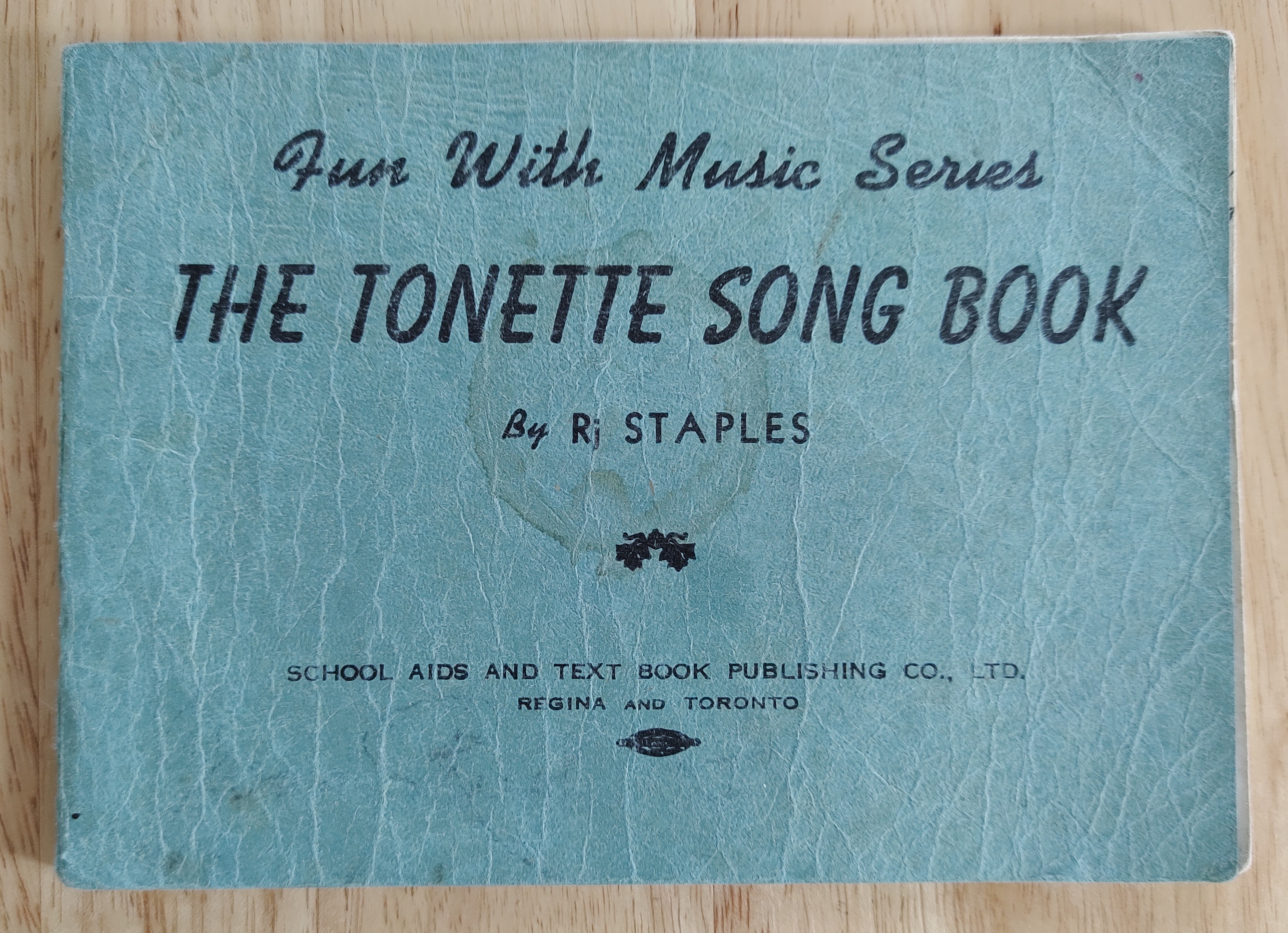
And of course there were several songbooks and method books from which to choose. Below are a few I've picked up.
Tonette Folio, copyright 1938
Melody Fun, copyright 1938, revised 1966
Tonette Tunes and Technic, copyright 1941
The Tonette Song Book, copyright 1946
Coming up in future posts....the song flute and flutophones.
I've edited the video from my recent woodwind recital into individual piece videos and uploaded them as a playlist on YouTube. The live stream video is still available as well. There are seven videos in the playlist. The preview below shows the first piece on the program (and playlist).
It's been quite a few years since I've done a recital. This past spring I made the commitment to put together a recital for the end of summer. It was originally schedule August 13th, but I got the dreaded Covid 4 days before. Now the rescheduled date of October 8th is fast approaching. This is going to be a woodwind multi-instrument program. It's my first time doing an "official" non-clarinet only recital.
I figured if I was going to do a doubling recital, I may as well do it right. There are pieces with the traditional woodwind family members....clarinet, flute and sax. But there are also a few pieces for instruments not normally seen in a recital setting. 19 instruments in total. It will hopefully be livestreamed and recorded.
Sonatina by Darren Lord
The Cycle of Life (O Ciclo da Vida) by Ricardo Matosinhos
Geordi Tunes by Peter Hope
Future Echoes from the Ancient Voicesof Turtle Island by William Moylan
Rainmaker by Philip Parker
Grande Fantasie de Concert “L’ Eco” by A.N. Mezzetti
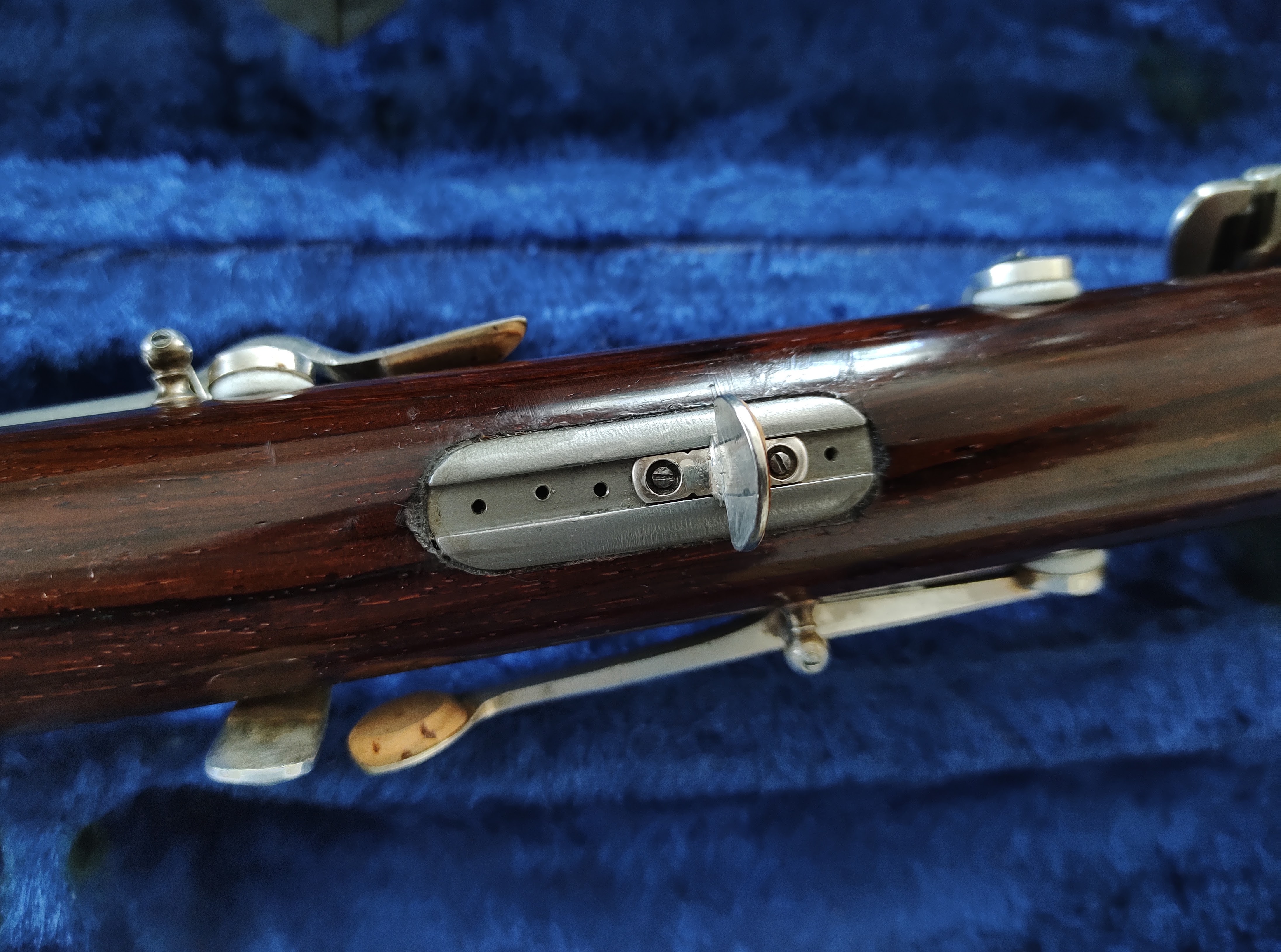
A few months ago, an unusual tenor recorder showed up on the big auction site. It was keyed (almost) like an eight-key flute. Other than "Made in Germany", there were apparently no other indications of a maker. The headjoint was clearly cracked in the photos. But it was unusual enough that I decided to place a bid, and surprisingly I won the auction. There was some competition, but I think the cracked head scared most people away. It was obviously a high-end recorder from back in the day....rosewood, keys, adjustable thumbrest, nice case.
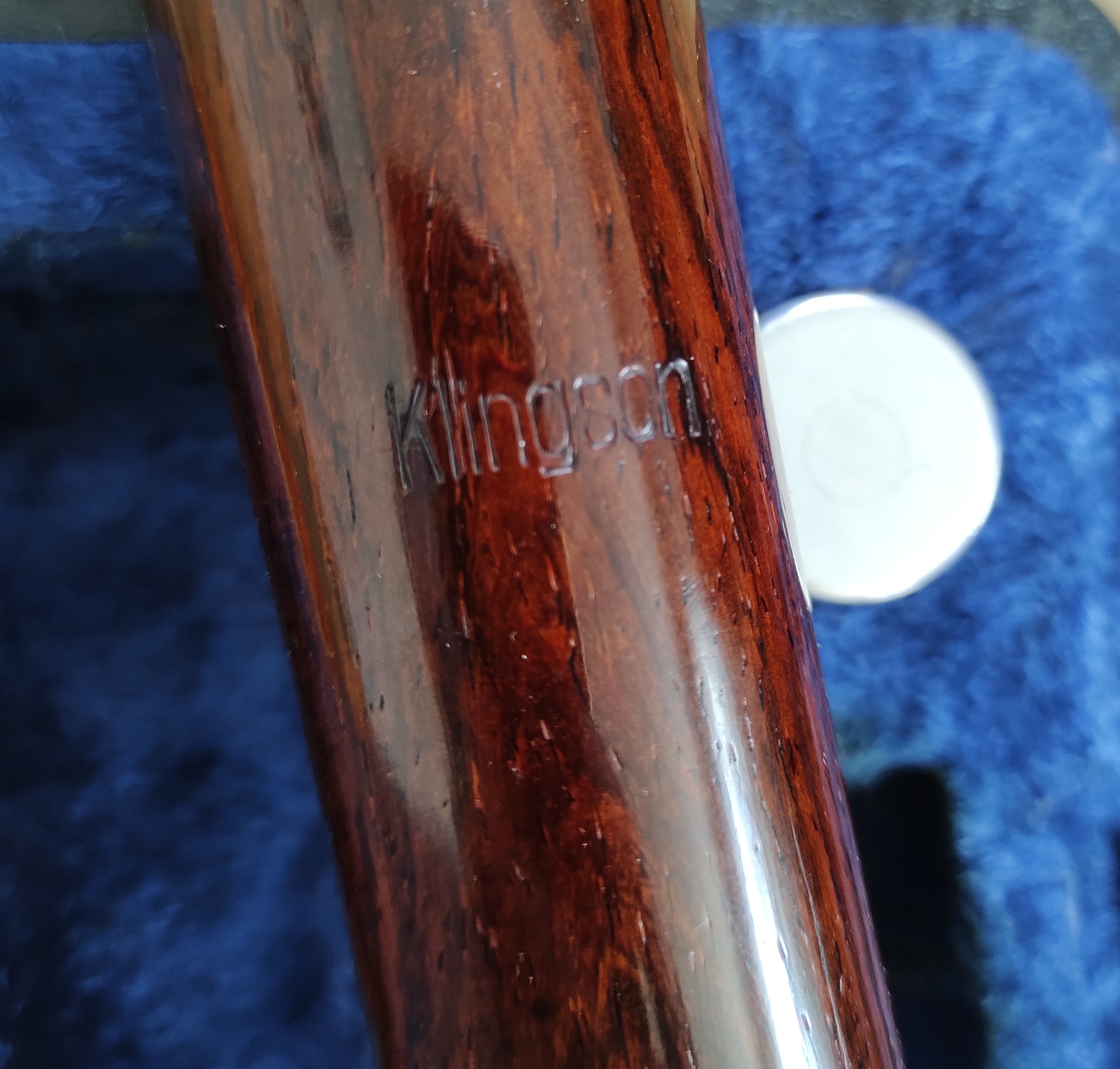
The night that I won the auction, the same seller listed another tenor recorder by the same maker. The headjoint and footjoint were shaped exactly the same and the wood looked the same. This time it was a "normal" one, and it had the name Klingson stamped on it. I knew I'd seen that name before, so after some quick research, I found Klingson was a brand name used by woodwind maker Karl Hammerschmidt. I could also see that the headjoint on this one seemed to be fine. Would that headjoint fit the keyed one, or were they possibly switched at some point? I decided I needed to try for that one as well. After waiting a week for the auction to end, I won that one too. Oddly, I was the only bidder. Normally a rosewood tenor would have a lot of interest.
When the first one showed up, the crack was indeed pretty bad. It also had two old cracks that had been "repaired" at some point. Cracks can always be fixed, but I was hopeful the other headjoint would fit when it arrived. A week later, the "normal" one arrived. The headjoint was a tad too small to fit on the keyed one. The normal one had a nice tone, but intonation was a bit wonky. The keyed one was going to have to be restored, and I had just saved a website of a recorder repairman that had been posted in a Facebook recorder page a few weeks prior.
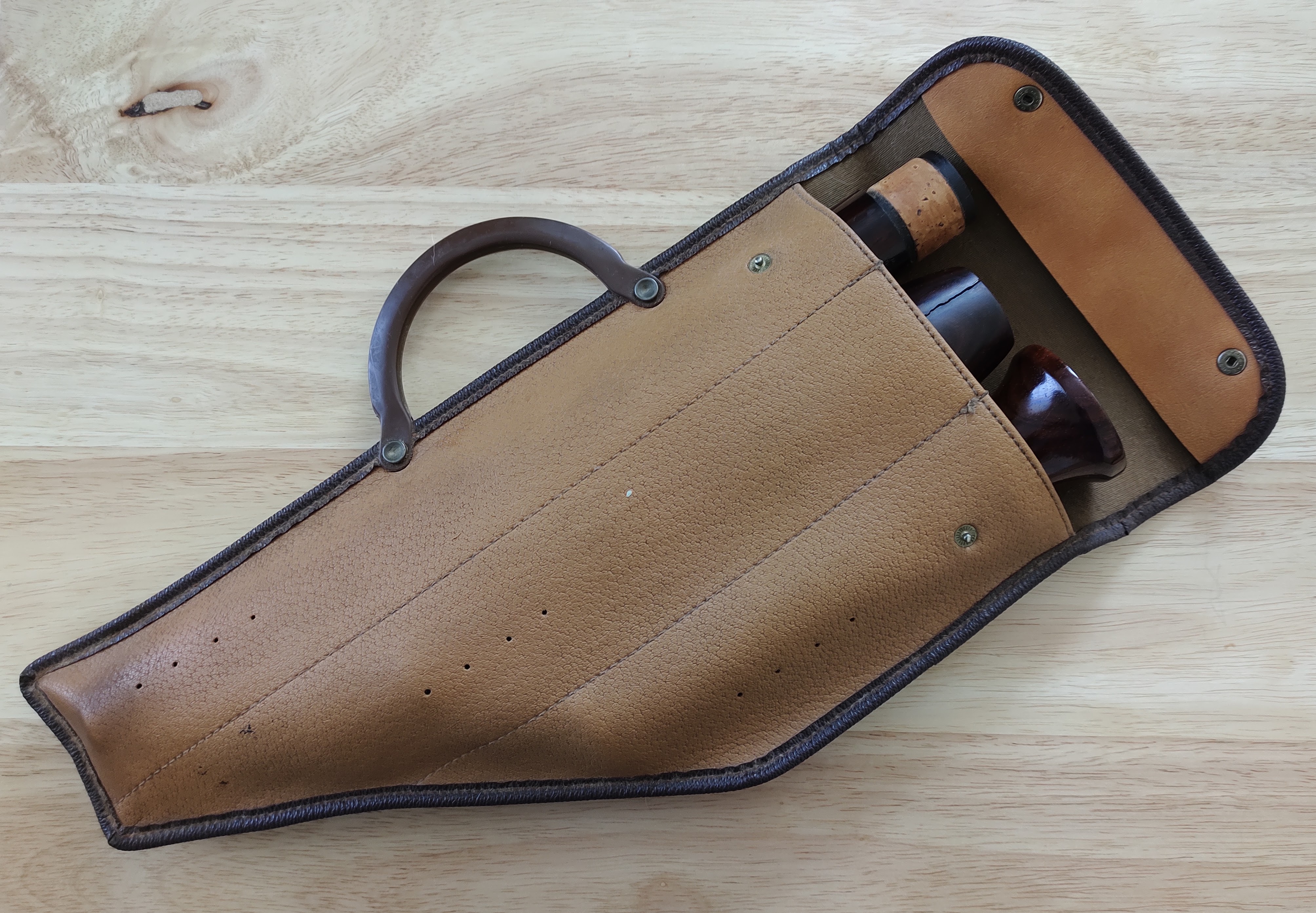
So I contacted Werner John at TLC Recorder Optimization to see if he would take a look at it/them. We decided I should have the pads replaced locally since he would have to special order them, then send both recorders to him to do the rest of the restorations. Jon Goodman at Goodman Custom Woodwinds replaced the pads and polished the keys (they were so tarnished, I originally thought they were brass). Then off to Vermont they went. After receiving them, Werner called to discuss options. We decided since the headjoint cracks were quite extensive on the keyed one, and the normal one had a good headjoint, the best option would be to make the good one fit both recorders and leave the cracked one alone.
The recorders just arrived back from Werner. He did an amazing job! The good headjoint now fits both instruments perfectly. I can tell he did a lot of work on both instruments. They both play beautifully. The wood is just gorgeous on both as well. Pictures don't do them justice. And he was able to fix the wonky intonation on the normal one. He also worked out and included a fingering chart for the highest octave on the keyed recorder. I highly recommend Werner for any recorder repair you may need. And also thanks to Jon Goodman for his work on the keyed recorder as well.














 Brian Blauch - Clarinet/Woodwind Specialist